Sigismund Báthory’s ascent to power (r. 1588-1598, 1598, 1598-1599, 1601-1602) at the young age of 15, prompted Sándor Kendy, former governor of the region (1583-1585), to say: “no sooner had you handed him the reins, you will regret it!”
Records of him and his deeds are rather contradictory. Ciro Spontoni, author of “Historia della Transilvania”, describes him as “truly a prince of Transylvania, steadfast (probably in his principles as much as in his resolutions), a man always prudently calculating his actions” whereas a contemporary, less favourable chronicle says of Sigismund Báthory (and Rudolph II): “In Alba-Iulia as much as in Prague, matters of the state were in the hands of a neurotic, ailing man.”
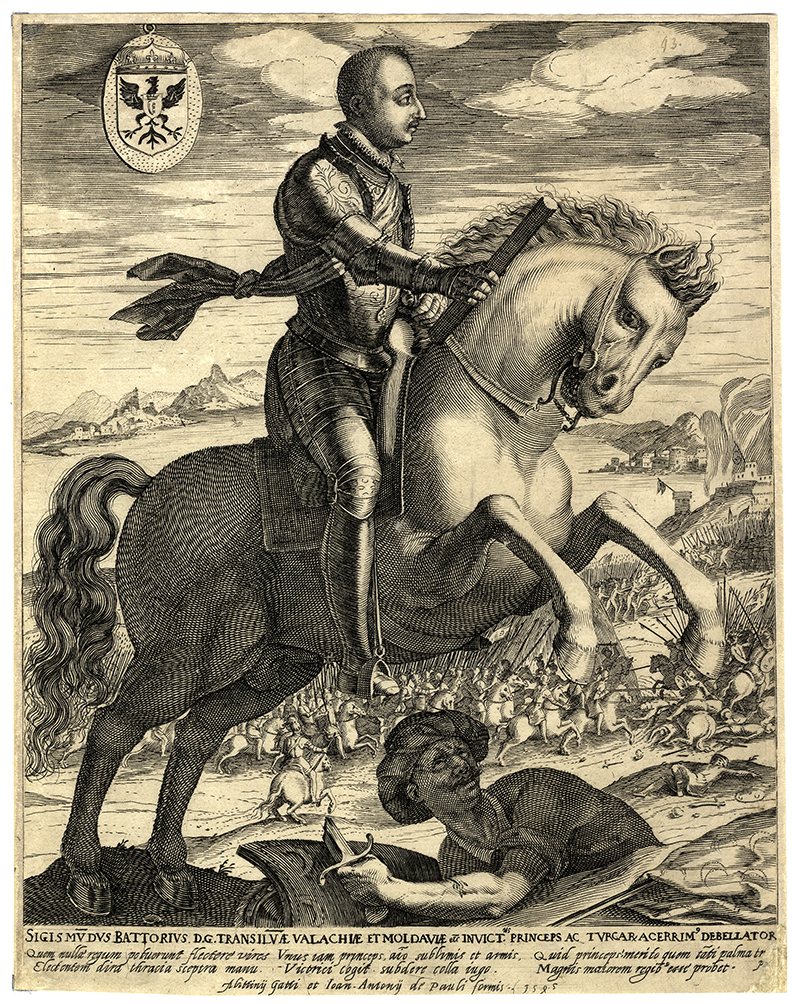
Brought up by Italian and Hungarian Jesuits at the court in Alba-Iulia, Sigismund had come to appreciate Italian culture and later employed many of its representatives at his court in Transylvania
Among these were singers, instrument players, gardeners, cooks, even Italian cheese producers, magi and medium-sorcerers allegedly capable to speak to the dead (among these John Hunyadi, whose successful campaigns were of special interest to the Prince).
Upon ascending to power Sigismund Báthory cruelly annihilated the pro-Ottoman party in his entourage with the support of his uncle, István Bocskay, at a time when Sinan Pasha and the Tartars were beginning to reverse the tide of Christian favourable results, closing up on Transylvania.
Sigismund Báthory’s rule as prince is closely connected to Michael the Brave. Their relation started with what looked like a gesture of appreciation: in a famous letter to the Sultan, Sigismund put up Michael’s name and recommended him as a strong contender for the throne of Wallachia. However, their interests soon proved divergent and the two confronted one another at the Battle of Guruslău (1601). Ironically, the battle cut both short of something – Sigismund of his ruling career, and Michael of his very life, as he was killed within days of his success on the battlefield.
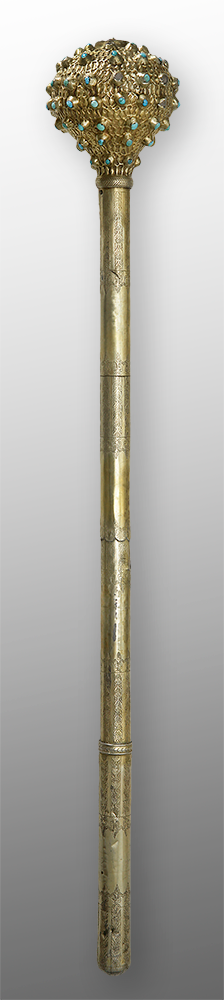
coll. Hungarian National Museum