
Andrew Báthory ruled as Prince of Transylvania only for a couple of months, when he took the office from his nephew Sigismund, in 1594, and then again very briefly prior to the Battle of Șelimbăr which led to his death (1599).
Ciro Spontoni, author of “Historia della Transilvania” (published 1638), described him as “a highly ambitious Cardinal of the Holy Church”.
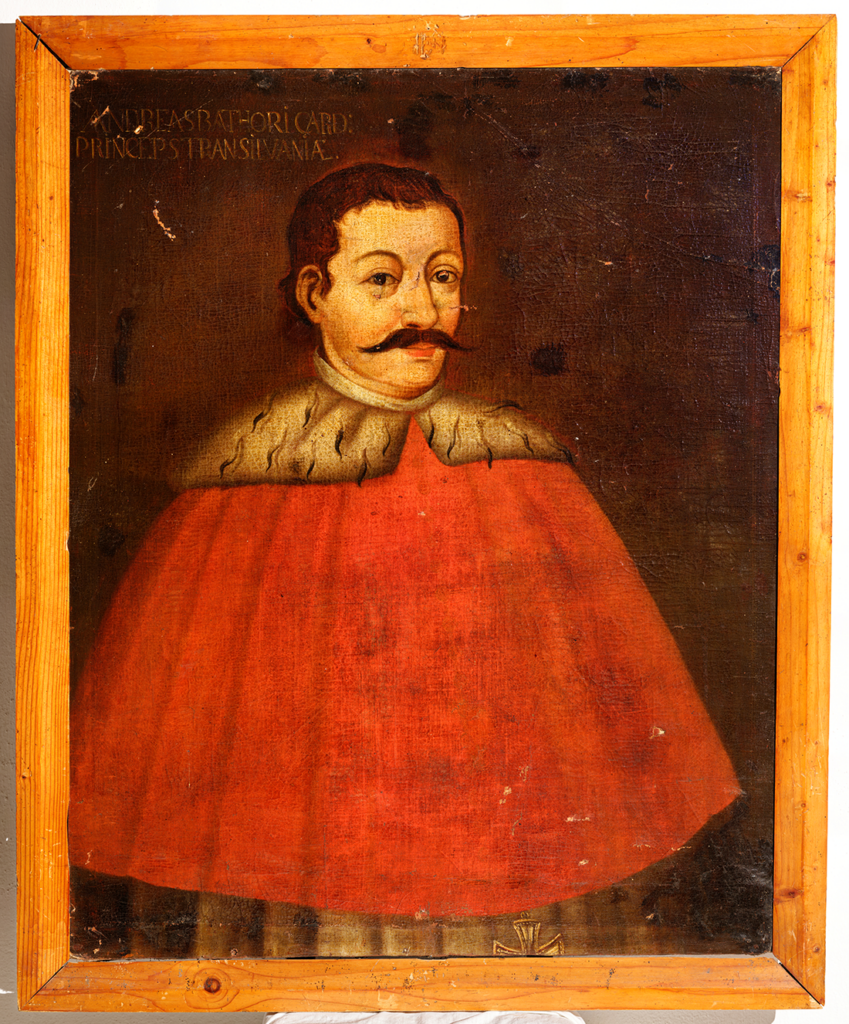
Andrew Báthory made public his dissatisfaction with Prince Sigismund’s position who favoured Habsburg interests, which Báthory saw as an act of betrayal. This turned him into a dedicated ally of the Poles and an enemy of the anti-Ottoman league, particularly since his memories of earlier wars and disputes with the Habsburg empire (then under Ferdinand I) were still pretty much alive.
Andrew Báthory is reputedly remembered as the Transylvanian prince whose death was similar to that of Michael the Brave. The rout he suffered at the Battle of Șelimbăr (1599), paved the way for Michael’s triumphant entry into the Alba Iulia Citadel.
Buried in the Roman-Catholic Cathedral in Alba Iulia, the short-lived Báthory prince and cardinal owed this final gesture at least in part to Michael the Brave’s good-will. For he had not wished him dead.