Transylvania’s Early Days
The Principality of Transylvania found itself from the outset, between two of the main empires of the day – the Ottoman and the Habsburg –, each with its own story and history.
The Habsburg Empire was ruled by a hereditary dynasty: title to the throne was inherited within the House of Habsburg. Habsburgs were staunch Catholics, had close ties to the Pope and intolerant to other Christian confessions. The year Queen Isabella was born (1519) the empire was divided between Kinf Maximillian’s sons – Charles V inherited the western territories while Ferdinand I took the eastern lands. Their motto, AEIOU, was an acronym for “All the world is subject to Austria”.
The Ottomans also thought they were meant to lead the world, entertaining universal ambitions; the sultan, who was at the head of the Ottoman empire, also inherited the throne. Yet compared to the Habsburgs, Ottomans were more tolerant toward other confessions than Islam and allowed their subjects to practice their religion. They ruled conquered territories by appointing (local) representatives who had to pay a tribute – a hefty contribution toward the imperial treasury.
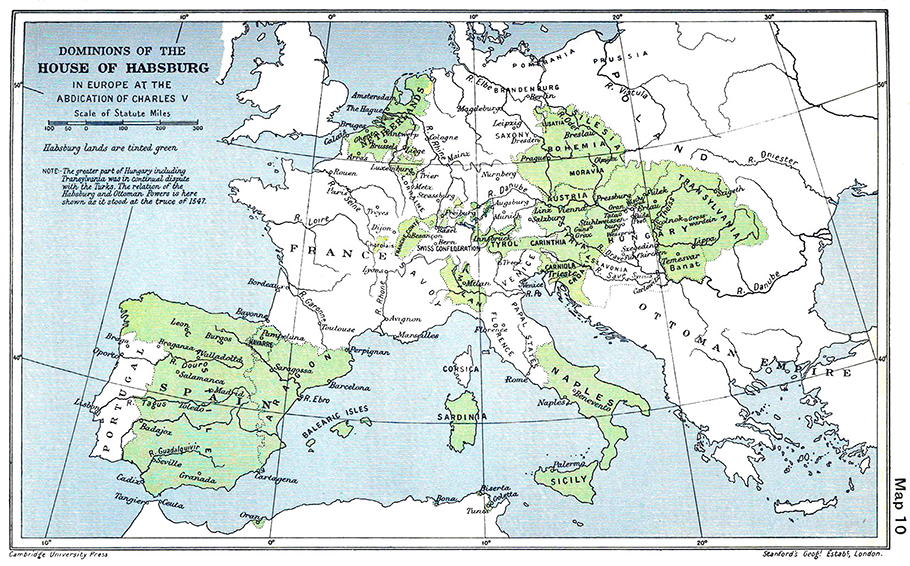
The map shows the position the Principality of Transylvania held in 1547 in relation to the two super-powers of the day, and how the two dominated Europe.