
Michael the Brave is thought of as the first Romanian ruler to have brought together Transylvania and Wallachia under a single rule, a feat accomplished upon entering victorious the citadel of Alba Iulia (1599). To this he promptly added Moldavia by the ousting of Prince Ieremia Movilă (1600); hence his reputation as a Unifier of the three Principalities.
Michael the Brave became known to the great political powers of the day due also to a letter Sigismund Báthory, Prince of Transylvania, wrote to Sinan Pasha, Grand Vizier of the Ottoman Empire, in 1593. Báthory’s letter recommended Michael as the most suitable candidate for the throne of Wallachia. Despite this auspicious start, Michael the Brave soon became the Ottomans’ sworn enemy.
« With God’s will, this Michael will free the Dacians from the Ottoman yoke ». And so what was to became a legend later, began during the year 1596. Battles at Călugăreni, Bucharest, Târgoviște, and Giurgiu turned into landmarks of the anti-Ottoman war waged with the support of Pope Clement VIII and in which Michael the Brave took part alongside Sigismund Báthory. The former’s fame reached King Henry IV of France who praised him: « If ever there was a prince in this world whose heroic deeds are worthy of glory, it is certainly Signor Michael, Prince of Wallachia. »
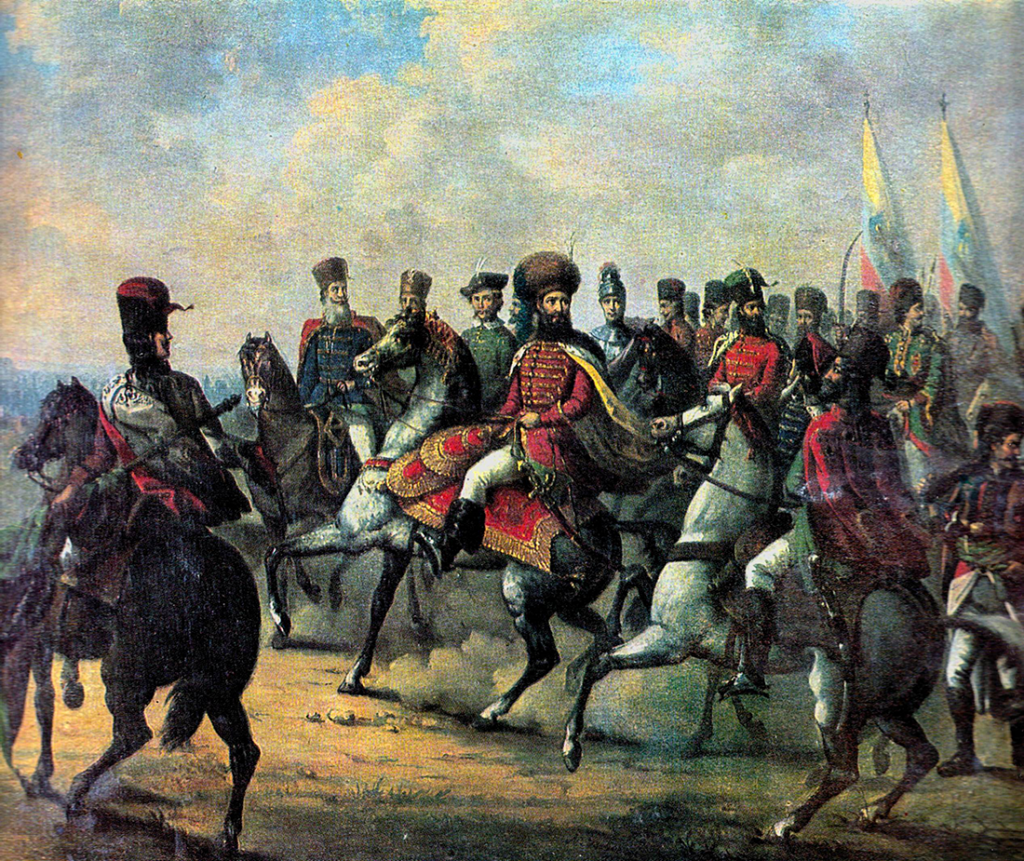
However, by 1600, Michael the Brave’s relations with his former allies, Sigismund Báthory and Giorgio Basta, the great Habsburg general, took a more complicated turn. Both became his enemies, as did the Poles and the Transylvanian nobles, who never accepted him as Prince. Michael wrote a letter to Emperor Rudolph II to ask for his support. In it he stated: „I had hoped His Grace, the Holy Roman Emperor, will give me his confirmation, not only by bestowing honors on me, but also by sending imperial flags, letters and seals. Yet clearly he desires nothing but to drive me away from Transylvania (…)”.
To reclaim Transylvania, after losing the Battle of Mirăslău (1600) to General Basta, Michael the Brave travelled to Prague (1601), seeking an audience with Emperor Rudolph II; it was on this occasion that a court painter made him the portrait still popular among Romanians to his day.
However, the story ended sadly and abruptly as befits a tragic hero. The emperor’s support lasted only until, the following year, Michael defeated Sigismund Báthory at the Battle of Guruslău, a success he had no time to relish. General Basta, his conjectural ally, ‘summoned two or three of the Walloon captains and confessed to them: If we wish to live’, he said, ‘we who are loyal to the emperor, we must get rid of the Romanian, for he is set to kill us and take the land all to himself.’
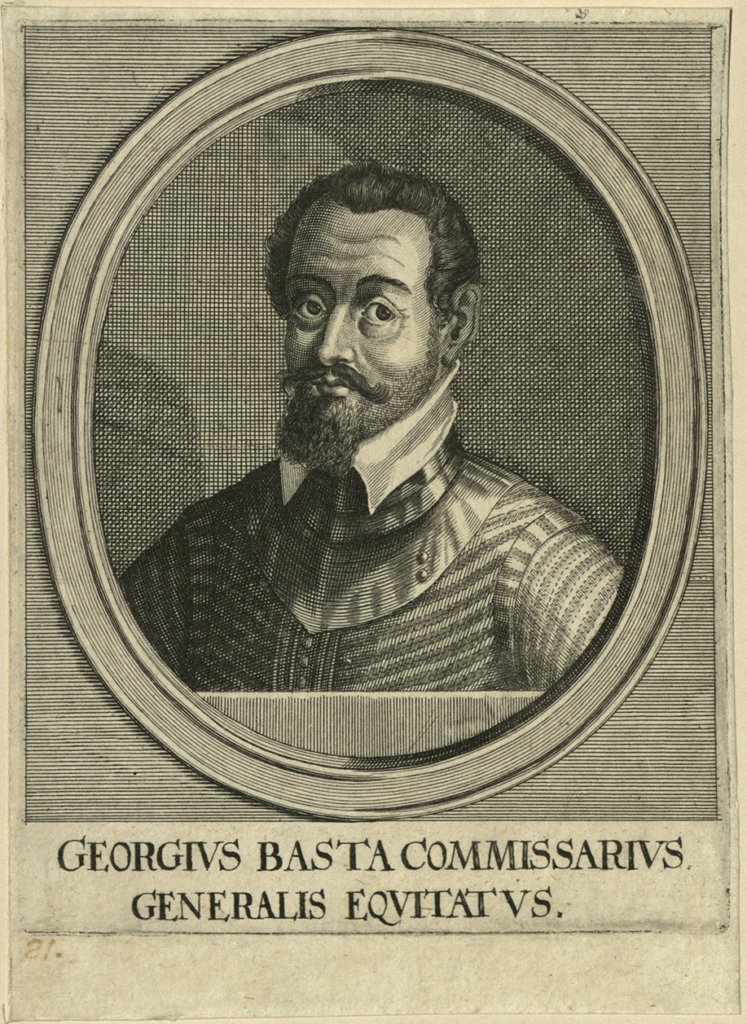
In 1601, no sooner did Michael come out of his tent set in the plain at Câmpiile Turzii, that ‘a Walloon (inhabitant of the Walloon region in today’s Belgium) pointed his gun, fired it and shot him in his left arm as he was reaching for his sword, for Michael was left-handed. Another Walloon immediately pierced his chest with his sword while a third shot him from behind, and as he fell to the ground, they severed his head with his own sword.’